A copper water bottle is easy to use when its job stays simple: hold plain still water. The confusion usually begins when somebody reaches for lemon, a sports drink, hot tea or sparkling water and wonders whether the bottle can handle that too.
This guide gives a practical answer for AM Stores’ unlined copper bottles. It explains what belongs inside, what is better kept in another container and what to do after an accidental refill. It is product-care guidance, not a claim that a copper bottle can make unsafe water safe or replace advice from a medical professional.
Quick answer: use plain still water
Use an unlined copper bottle for potable, plain still water. That can be ordinary tap water, filtered water or bottled still water that was already safe to drink. Avoid acidic, carbonated, alcoholic, dairy-based and flavoured drinks.
The distinction matters because copper is a reactive metal. A drink’s acidity, temperature, ingredients and contact time can all affect how it interacts with a metal surface. Product construction matters too: advice for a stainless-steel flask with a decorative copper-coloured exterior is not automatically advice for a bottle whose interior is unlined copper.
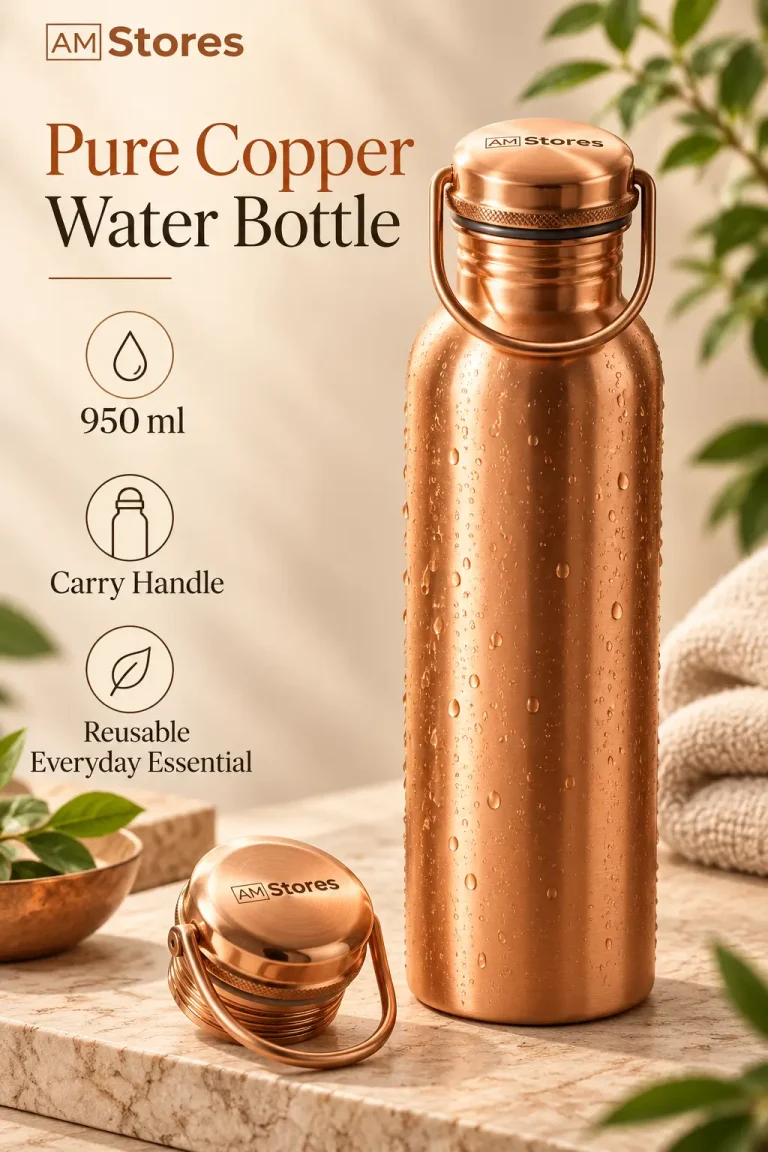
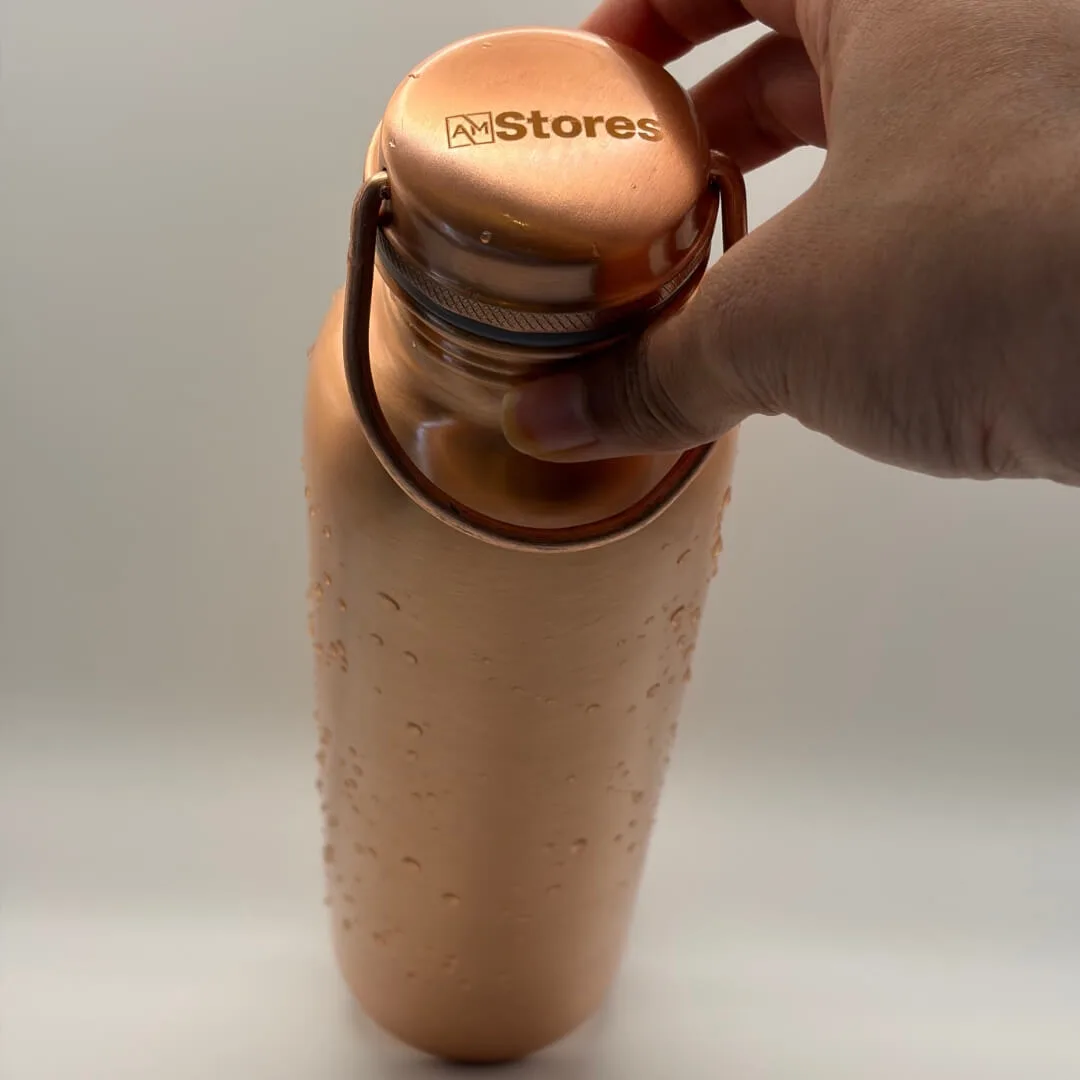
The AM Stores smooth copper bottle with carry handle, like the current Hammered and Matte designs, is sold for plain still water. If you own a different bottle, read that maker’s instructions rather than assuming every copper-coloured product is built in the same way.
At a glance: drink-by-drink guide
| Drink | Use in an AM Stores copper bottle? | Practical reason |
|---|---|---|
| Plain still water | Yes | This is the bottle’s intended use. |
| Filtered or bottled still water | Yes | It is still plain water, provided it is already safe to drink. |
| Lemon water or fruit-infused water | No | Citrus and many fruits add acid; use glass or another suitable container. |
| Fruit juice, squash or sports drinks | No | These may contain acids, sugars, salts, flavourings or preservatives. |
| Sparkling water or fizzy drinks | No | They are carbonated, often acidic and can create pressure in a closed bottle. |
| Milk, smoothies or protein shakes | No | The bottle is not designed for dairy or drinks that leave food residue. |
| Tea, coffee or boiling water | No | The bottle is not an insulated hot-drinks flask. |
| Alcoholic drinks | No | Wine, cocktails and similar drinks can be acidic and are outside the intended use. |
If you want a short rule that is easy to remember, use water without bubbles, fruit, flavouring, milk or added powder. Our full copper bottle care guide covers everyday washing, drying and storage.
Why acidic drinks are the main concern
Copper is an essential nutrient, but more is not automatically better. The UK government’s overview of copper exposure and health notes that food and drinking water are common routes of exposure and that high intake can cause unwanted effects. The World Health Organization’s drinking-water material on copper treats it as both a nutrient and a potential drinking-water contaminant.
Acidity is especially relevant when a food or drink touches bare copper. As a clear food-service reference, the US FDA Food Code limits copper contact with foods below pH 6 and names vinegar, fruit juice and wine as examples. That code is not UK consumer law, but it illustrates why “it is only a little lemon” is not a useful care rule for an unlined bottle.
You do not need to measure the pH of everything in the kitchen. Keeping acidic drinks out of the bottle is simpler, more consistent and less likely to leave you guessing about a reaction, an unusual taste or a changed interior surface.
Can you put lemon water or juice in a copper bottle?
No. Lemon juice is acidic, and adding a slice or squeeze of lemon changes plain water into an acidic drink. The same caution applies to lime, orange, grapefruit and fruit-infused water. Even when the flavour seems mild, the drink is no longer the plain still water the bottle was designed to hold.
Fruit juice, cordial, squash and many electrolyte drinks are also poor choices. Their recipes can include citric acid, other food acids, sugar, sweeteners, minerals and flavourings. Those ingredients may leave residue around the neck, thread and seal as well as inside the bottle.
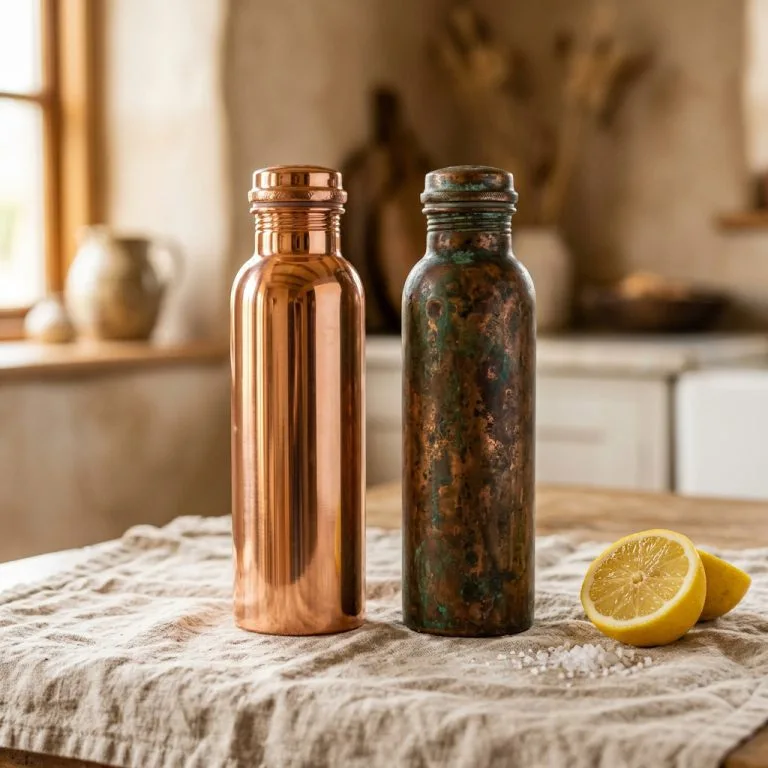
There is an important difference between cleaning and storage. Some traditional cleaning methods briefly use lemon or diluted vinegar on copper before a thorough rinse. That does not mean an acidic drink should be sealed inside for hours and consumed. Follow the measured steps in our guide to cleaning a copper water bottle, then rinse and dry it completely.
Can you put hot water, tea or coffee in it?
Use an AM Stores copper bottle for plain still water at a comfortable drinking temperature, not as a flask for boiling water. It has a single-wall metal body rather than vacuum insulation. The outside can respond quickly to the temperature of the contents, so a very hot fill creates an obvious handling and burn risk.
Tea and coffee introduce another issue: they are no longer plain water. They contain dissolved compounds, can leave colour and odour behind, and are normally poured hot. A purpose-made insulated flask or lined travel mug is the sensible choice.
Warm water is not a special authenticity or cleaning test either. If you are checking the material of a new purchase, use the evidence-based questions in how to tell if a copper water bottle is real rather than experimenting with heat, acids or household chemicals.
What about cold water, ice and the fridge?
Plain cold water remains plain water. The practical limitation is that an uninsulated copper bottle will not behave like a double-wall cold flask. It may become cold to the touch and form condensation on the outside, which can dampen a desk, bag or label.
A few ice cubes may be physically possible, but forcing large cubes through the neck can mark the surface and makes thorough drying less convenient. Do not put a filled bottle in the freezer. Water expands as it freezes, and that expansion can place stress on the body, cap and seal.
If chilled water is your preference, chill the water in an appropriate container first, then pour it into the clean copper bottle shortly before use. Keep the exterior dry before putting the bottle into a bag.
Why fizzy drinks and dairy do not belong inside
Sparkling water, cola and other fizzy drinks contain dissolved carbon dioxide. This makes them more acidic than plain still water. Carbonation can also build pressure inside a sealed container when it is moved or warms up. A copper bottle intended for still water is not the place to test how its screw cap behaves under that pressure.
Milk, milkshakes, smoothies, yoghurt drinks and protein shakes create a different cleaning problem. They contain food solids, fats or proteins that can remain around threads and seals. A narrow metal bottle is harder to inspect than a wide food container, and a quick rinse is not a dependable way to remove perishable residue.
The same practical rule covers soup, broth and meal-replacement drinks. Use drinkware specifically designed for hot, carbonated or dairy-based contents.
What to do if the wrong drink went in
Accidents happen. Finding a splash of squash or a forgotten lemon slice does not call for a dramatic home experiment. Use a calm, simple process:
- Empty the bottle promptly. Do not keep or drink contents that look, smell or taste unusual.
- Wash the bottle by hand according to its care instructions. Pay attention to the neck, cap thread and seal.
- Rinse several times with clean water so no cleaner or drink residue remains.
- Leave the bottle open until the interior and cap are completely dry.
- Inspect the inside in good light. If you see an unfamiliar deposit, damage or persistent discolouration, stop using it until you have obtained advice.
Do not try to “neutralise” one ingredient by adding another. Mixing cleaners, acids or alkalis inside drinkware can create a new problem and makes it harder to know what remains. If the bottle still smells odd or gives plain water a strong metallic taste after careful cleaning, contact AM Stores with photographs and your order details.
A simple routine for everyday use
Good care is mostly unremarkable. Start with drinking water you already trust. Fill the bottle with plain still water, close the cap without overtightening it and keep the outside dry. Empty and refresh the water regularly rather than treating the bottle as long-term storage.
After use, hand wash, rinse thoroughly and let both pieces dry fully with the cap removed. Do not put the bottle in a dishwasher, where heat, detergent and prolonged moisture may affect the copper surface and smaller cap components.
A copper bottle is not a purifier. If water may be unsafe, follow local public-health advice and use an appropriate treatment method before it reaches the bottle. For sensible quantities and the limits of the evidence, see our separate guide to how much copper water to drink per day.
Choosing a bottle you will use correctly
The most useful bottle is one whose intended use fits your routine. If you mainly carry ordinary water to work, yoga or the gym, an approximately 1 litre (35 UK fl oz) single-wall copper bottle can be straightforward. If you need coffee kept hot, sparkling water under pressure or a smoothie at lunchtime, choose a different container for that job.
You can compare the current AM Stores bottle designs by finish, dimensions and price. The Hammered, Matte and smooth Handle versions share the same plain-still-water guidance, so the decision is mainly about the exterior you prefer.
Read the current product page before ordering because dimensions, availability and care notes can change. Clear product instructions are more useful than broad promises about what all copper bottles supposedly do.
Frequently asked questions
Can I put lemon water in a copper bottle?
No. Lemon water is acidic, so it should not be stored in an unlined copper bottle. Use a glass or another container designed for acidic drinks instead.
Can I put hot water in a copper bottle?
Use an AM Stores copper bottle for plain still water at a comfortable drinking temperature. It is not an insulated flask and should not be filled with boiling water.
Can I put cold water or ice in a copper bottle?
Plain cold water is still plain water, but the bottle is not insulated and may develop condensation. Follow the product instructions and avoid freezing the bottle.
Can I put sparkling water in a copper bottle?
No. Sparkling water is carbonated and more acidic than plain still water. A sealed bottle can also hold pressure, so choose a container intended for fizzy drinks.
What should I do if I accidentally put juice or another drink inside?
Empty it promptly, wash the bottle by hand, rinse it thoroughly and let it dry completely with the cap off. Do not drink the contents if the bottle or drink looks, smells or tastes unusual.
Why does water sometimes taste metallic in a copper bottle?
A strong or unexpected metallic taste is a reason to stop using the water and inspect the bottle. Clean and rinse it carefully, and contact the seller if the taste persists.
Sources and further reading
- World Health Organization: copper in drinking water
- GOV.UK: copper general information
- US FDA Food Code — cited as a food-contact reference, not as UK law
Product guidance applies to the current unlined AM Stores copper bottle range. If your bottle is lined, insulated or made by another company, follow its own instructions.
Shopping for a copper bottle in the UK? Compare our copper water bottles by finish, size and price in pounds, with UK delivery options at checkout.