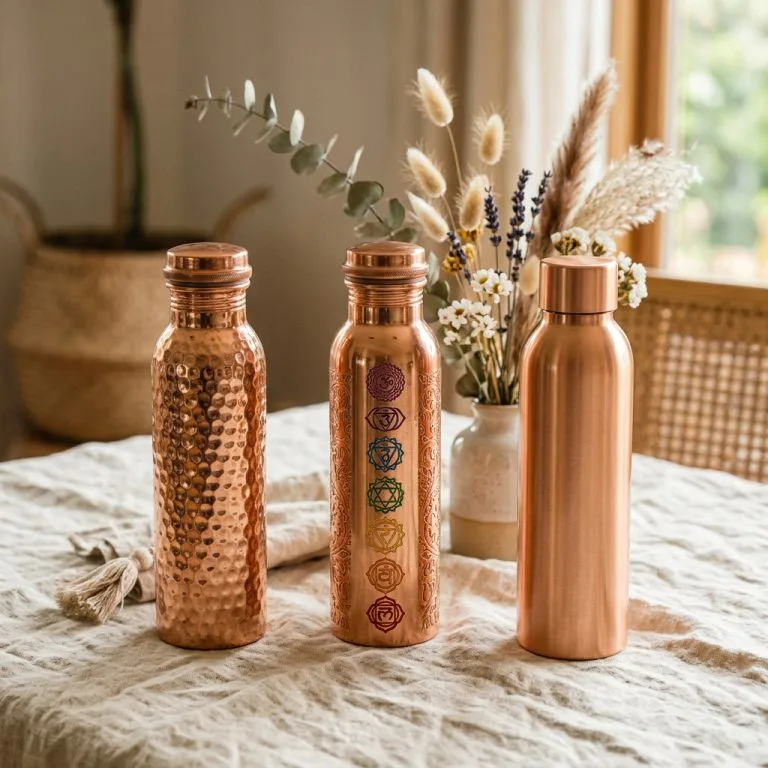
A magnet, a change in colour or a heavy feel cannot prove that a copper water bottle is solid copper. Home checks can reveal questions worth asking, but reliable confirmation comes from clear material specifications and relevant testing linked to the product.
If you are buying a copper bottle in the UK, start by checking what the seller means by “copper”. Does it describe the bottle body, a thin outer layer or simply the colour? Then check the inside, the intended use and the evidence behind any purity claim.
This guide explains how to make those checks without scratching, heating or chemically testing your drinking bottle.
What does “real copper” actually mean?
Several different constructions can have a copper appearance. The distinction matters more than a photograph of a shiny bottle.
| Description | What it means | What to establish |
|---|---|---|
| Solid copper body | The body material is copper throughout its thickness. | The stated composition and whether the interior is lined. |
| Copper plated body | A surface layer of copper covers another material. | The underlying metal and the material touching the water. |
| Copper coloured finish | The description refers to appearance. | The actual body and interior materials. |
| Copper alloy | Copper is combined with other elements, as in brass. | The specific alloy and intended use. |
The Canadian Conservation Institute explains plating and copper alloys. These material distinctions are useful when reading product descriptions.
A clearly labelled plated bottle is not automatically a fake. The problem is a mismatch between what a seller claims and what the product contains. Equally, “solid copper” does not establish an exact purity percentage or describe every cap, handle and seal.
Five checks to make before buying
1. Read the specification beyond the product title
Look for a material statement in the product details, rather than relying on words such as traditional, premium or Ayurvedic.
Check whether that statement covers the body alone or also the interior. A bottle can have a copper exterior and a different material in contact with the water.
If the title says pure copper but the specification says copper finish, ask the seller to explain. Save the listing and their reply so you have a record of what was described when you ordered.
Capacity, measurements and care instructions should also agree across the page. Inconsistent specifications are a reason to seek clarification, although they do not by themselves establish that a bottle is counterfeit.
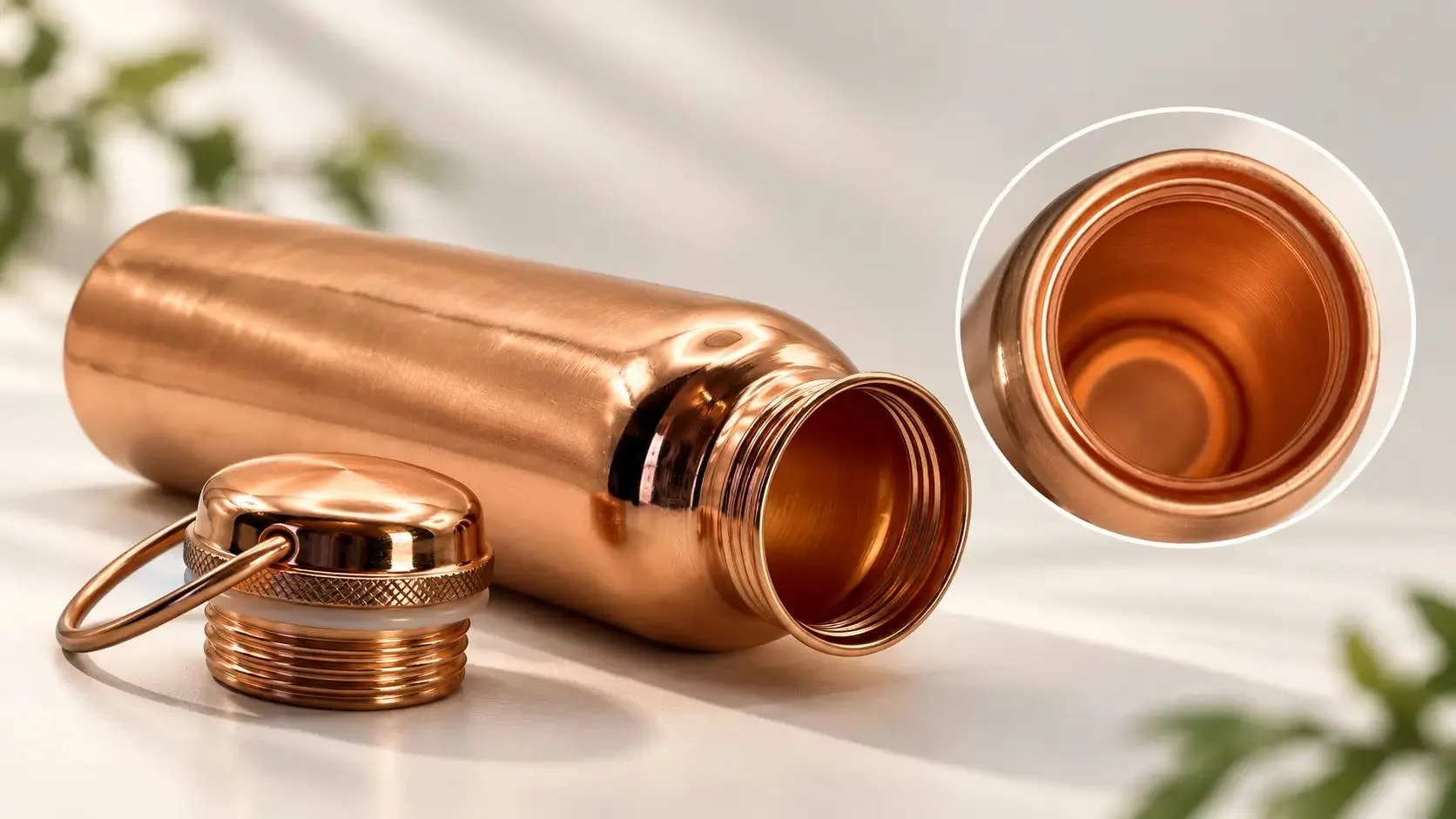
2. Ask to see the inside and the cap
Useful product photographs show the opening, interior, base and underside of the lid. If those views are missing, request them before buying.
A silver coloured interior could indicate a different internal material. It does not identify that material or prove deception. Ask whether it is an intentional lining and whether the description accurately reflects the construction.
Likewise, a copper coloured interior is not proof of solid construction. Photographs help you compare the item with its description; they are not a laboratory analysis.
Do not scrape the inside to investigate. If you already own the bottle and notice peeling or an unfamiliar exposed layer, stop using it while you ask the supplier to identify what you are seeing.
3. Understand the limits of a magnet test
Copper does not attract an ordinary magnet in the way iron does. However, other materials also show little or no obvious attraction. UK metals specialist Langley Alloys explains copper’s magnetic behaviour.
The practical implication is that a magnet not sticking cannot confirm copper. It cannot distinguish every possible body material beneath a copper surface.
If you use a small household magnet, hold it gently near the body without dragging it across the finish. Check the body separately from the cap and handle: different components may use different materials.
A strong attraction to the body warrants a question if the body was described as solid copper. Attraction only at a fitting tells you about that location, not the composition of the entire bottle.
Either result leaves the exact copper percentage unknown.
4. Treat tarnishing as a surface change, not a certificate
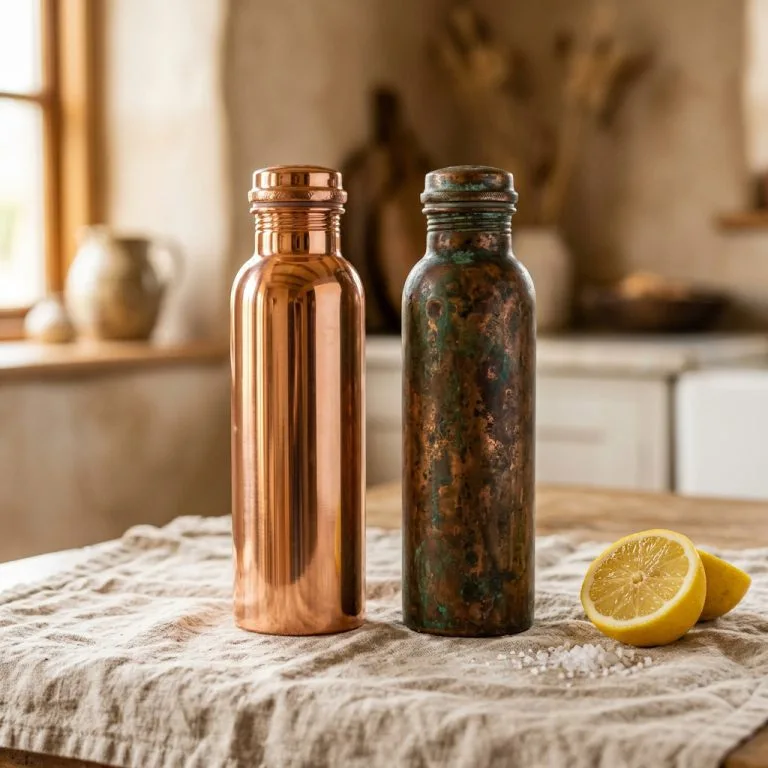
Copper and copper alloys can develop different surface colours. The Canadian Conservation Institute describes these changes, including brown, black, blue and green corrosion products.
That means a darker surface cannot establish what lies beneath it. A copper surface layer may also change colour. Conversely, a protective coating can affect appearance without identifying the underlying metal.
Do not deliberately leave water standing to “prove” authenticity. You do not need to create staining before deciding whether a seller’s explanation is adequate.
Nor should green deposits inside a drinking bottle be treated as a reassuring purity badge. If deposits are unexplained, pause use and ask the supplier for advice. Material appearance alone cannot establish drinking water safety.
5. Use weight and price for comparison, not proof
There is no universal weight that proves a copper bottle is genuine. The amount of material, body dimensions, construction and fittings all affect what you lift.
Compare an empty bottle with the weight stated for that exact model. A substantial discrepancy is worth querying. Do not compare two bottles of similar capacity and assume the heavier one must be purer.
The same applies to price. An expensive bottle is not automatically authenticated, and a discounted bottle is not automatically fake. Ask what supports the material claim instead of using an arbitrary price threshold.
If you prefer a plain appearance, the AM Stores smooth copper bottle with carry handle lists approximately 1 litre (35 UK fl oz) capacity, a screw cap and model specific measurements. Those details help you assess everyday fit; they should not be mistaken for independent purity testing.
What evidence should you ask a seller for?
A useful answer identifies the product, the claim and the evidence supporting it. A decorative “tested” badge tells you much less than a readable report.
Before buying, ask these questions:
- Is the body solid copper, an alloy, plated or simply copper coloured?
- What material touches the water, including inside the cap?
- Are there any internal linings or coatings?
- What documentation supports the stated copper content?
- Does that documentation identify this model, a relevant production batch or only a raw material sample?
- What evidence supports suitability for the intended drinking water use?
If a report is supplied, look for the laboratory name, date, sample description, method and actual results. Ask the seller to explain anything that is unclear, including how the tested sample relates to the bottle being sold.
A raw material report and a finished product assessment answer different questions. A report from another model or an unidentified sample needs an explanation before you can rely on it for your purchase.
For an unresolved concern, ask a competent materials testing laboratory what assessment would be appropriate. A home checklist cannot assign a credible purity percentage.
Purity and suitability for drinking water are separate questions
Knowing what a bottle contains is only part of assessing its use. You also need to know whether the finished item is suitable for the liquids and conditions described by its manufacturer.
The Food Standards Agency’s guidance on food contact materials addresses substances transferring from materials into food. This is why a composition claim alone should not be treated as a complete assessment of a drinking vessel.
Ask the seller about the intended liquid, temperature, care requirements and supporting product information. A purity percentage does not answer those practical questions.
It also does not demonstrate a health benefit. The NHS guidance on copper says people should be able to obtain the copper they need from their diet and warns that excessive intake can be harmful. That guidance is not an endorsement of a particular bottle.
Traditional Ayurvedic use is cultural context, not proof of composition or clinical benefit. Choose a bottle for its documented construction and suitability for your routine.
Checks to avoid when your bottle arrives
Skip scratch tests, flame tests, deliberate acid soaking and tasting water to judge whether the bottle is genuine. They do not provide a dependable assessment of the finished product and may damage it or expose you to avoidable risk.
The Canadian Conservation Institute notes that polishing removes some surface metal. Its museum treatment guidance is not a cleaning recipe for drinkware.
Instead, photograph the bottle as received, compare it with the listing and inspect it without altering the surface. Contact the seller about unexpected materials, peeling, sharp edges or damaged fittings before using it.
For AM Stores bottles, use plain still water only, hand wash and dry thoroughly. The smooth bottle’s product care instructions also advise washing before first use and avoiding acidic, carbonated and dairy drinks.
Frequently asked questions
Can I prove that a copper bottle is pure at home?
No. Household checks cannot establish an exact copper percentage. Ask for relevant material documentation and testing linked to the product.
Does a magnet not sticking prove that a bottle is copper?
No. Other materials can also show little or no attraction to an ordinary magnet. The result does not authenticate the bottle.
Does tarnishing prove that a bottle is solid copper?
No. A surface change does not establish the composition throughout the bottle wall. Tarnishing should not be used as a purity certificate.
Is a silver coloured interior a sign of fake copper?
Not necessarily. Ask what the interior material is and whether the bottle was accurately described as lined, plated or solid copper.
Does “99.9% copper” mean a bottle is safe for every drink?
No. A composition claim does not establish suitability for every liquid or temperature. Follow the product’s intended use and ask for supporting information.
Can I use lemon juice to test whether my bottle is real?
Do not use lemon juice as an authenticity test. A surface reaction cannot establish the bottle’s full composition or suitability for drinking water.
What should I do if the bottle does not match its description?
Keep photographs, your order details and the original listing. Avoid altering the bottle and ask the seller for an explanation and the available resolution options.
Choose with the product details in front of you
AM Stores offers approximately 1 litre (35 UK fl oz) bottles in Hammered, Matte and Smooth finishes, with screw caps and carry handles. Choose the appearance you enjoy, then check the individual specification and care requirements.
Explore the three AM Stores bottle designs and follow through to the product you prefer for current availability. Check the UK delivery information and checkout for delivery charges and estimates.
If you want clarification about materials before ordering, ask AM Stores a product question.
Shopping for a copper bottle in the UK? Compare our copper water bottles by finish, size and price in pounds, with UK delivery options at checkout.