
Copper can darken with use, and that surface change may be normal. If you are looking for how to clean a copper water bottle, start by checking what kind of mark you can actually see. Pale, raised or green marks should not be treated as ordinary tarnish without a closer look. Colour alone does not prove that a bottle is genuine or that an unfamiliar deposit is safe.
The great news is that getting it back to its original, shiny glory is incredibly simple. You don’t need harsh chemicals. Here are three super easy methods using stuff you probably already have in your kitchen cupboards.
Method 1: The Lemon and Salt Trick (Our Favourite)
This is the traditional way to clean copper, and it’s the one we always recommend at AM Stores because it works perfectly every time.
- Squeeze half a lemon directly into your bottle.
- Add exactly 1 tablespoon of table salt.
- Pour in a cup of warm water.
- Put the lid on tightly and shake it vigorously for about 2 minutes.
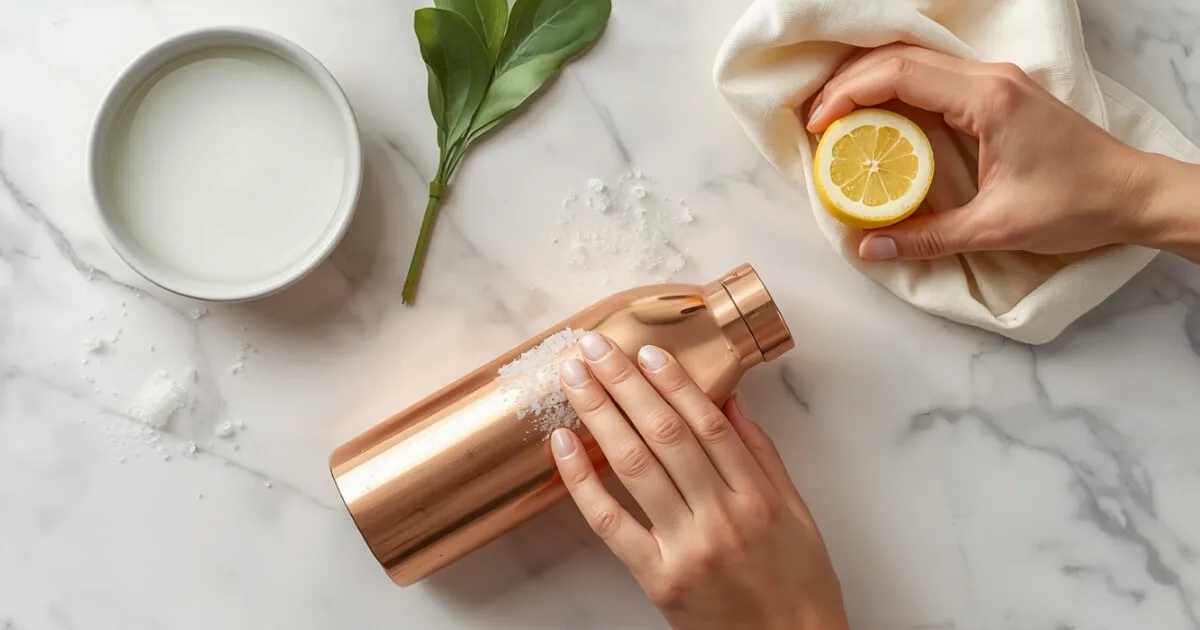
- For the outside, just take the lemon half you just squeezed, dip it in a bit of salt, and rub it directly on the copper surface.
- Rinse the whole thing thoroughly with plain water.
- Dry it immediately with a soft cloth (this is crucial to stop water spots from forming).
The citric acid in the lemon mixes with the salt to create a natural reaction that literally melts the oxidation away without damaging the copper underneath.
Method 2: White Vinegar and Salt
Out of lemons? No problem. Standard white vinegar works just as brilliantly.
- Mix equal parts white vinegar and water inside the bottle.
- Add 1 tablespoon of salt.
- Give it a good shake and let it sit on the counter for 10 minutes.
- Pour it out, rinse it really thoroughly, and dry it straight away.
Method 3: Tamarind Paste (The Traditional Indian Method)
If you happen to cook a lot of curries, you might have tamarind paste in the fridge. In India, this has been the go-to copper cleaner for centuries.
- Smear a little tamarind paste on the inside and outside of the bottle.
- Leave it to work its magic for 15-20 minutes.
- Scrub it gently with a soft cloth.
- Rinse it off and dry completely.
What You Should NEVER Do
Copper is resilient, but it has a few enemies:
- ❌ Never put it in the dishwasher. The extreme heat and harsh chemicals will ruin it.
- ❌ Never use wire wool or abrasive scrubbers. They will deeply scratch the beautiful surface.
- ❌ Never use bleach or chemical cleaners. They are way too harsh for food-grade copper.
- ❌ Never let it air dry. Always dry it with a towel to prevent watermarks.
How Often Do I Need to Do This?
For daily use, just a quick rinse with warm water and mild dish soap is fine. We suggest doing the lemon-salt deep clean once a week, or just whenever you notice it getting a bit too dark for your liking.
For our complete, step-by-step maintenance guide, bookmark our Copper Care Guide.
Haven’t got your own copper bottle yet? Have a look through our collection of pure copper water bottles—every order includes free UK delivery.
Frequently Asked Questions
Can I put my copper water bottle in the dishwasher?
No. The extreme heat and harsh detergents in a dishwasher will permanently damage your copper bottle. Always hand wash with warm water and mild soap, and deep clean weekly with lemon and salt.
Is the green patina on my copper bottle harmful?
Green or blue marks can have different causes. Colour alone cannot prove a bottle is safe or genuine. If you see an unfamiliar deposit inside, stop using the bottle, clean it as directed and contact AM Stores if the mark persists.
How do I stop my copper bottle from tarnishing?
Tarnishing is natural and unavoidable with pure copper. You can slow it by drying the bottle thoroughly after each wash and storing it in a dry place. Regular weekly cleaning keeps it bright.
Can I use baking soda to clean copper?
While baking soda won't damage copper, it's less effective than acid-based methods (lemon or vinegar). Stick with lemon and salt for the fastest, most thorough results.
Why does my copper bottle smell?
A faint metallic smell is normal, especially when new. It fades with regular use and proper cleaning. If it persists, do a thorough lemon-salt clean and rinse several times.
Shopping for a copper bottle in the UK? Compare our copper water bottles by finish, size and price in pounds, with UK delivery options at checkout.