
Disclosure: AM Stores sells copper water bottles. This article provides general product-safety information, not medical advice. We have not laboratory-tested the copper concentration of water stored in our bottles. Public-health sources were checked on 13 September 2026.
The short answer
There is no official daily amount for water stored in a copper bottle. The public-health guidance reviewed for this article does not recommend a fixed number of glasses, a particular storage time or a copper-water drinking schedule.
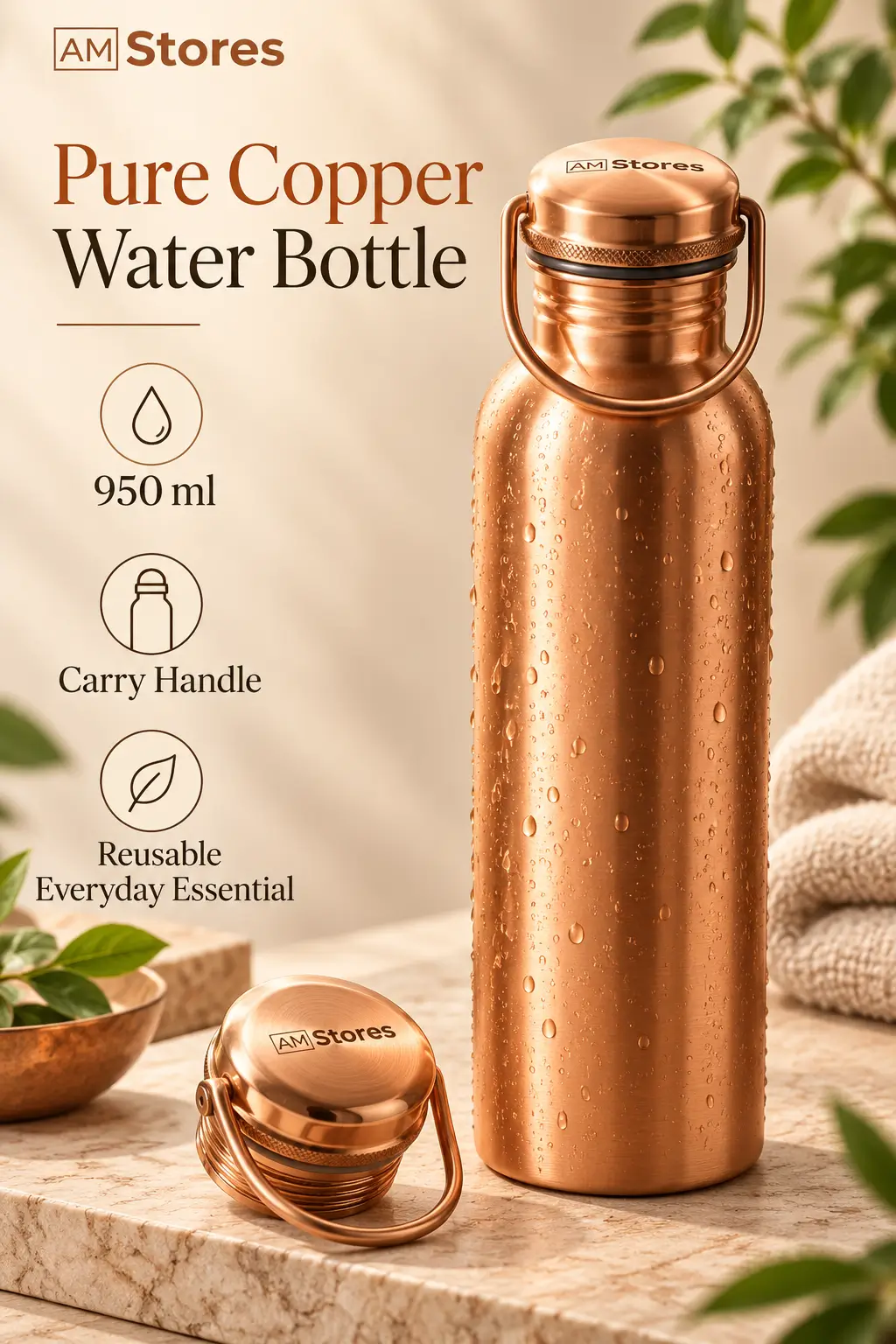
The approx. 1 litre capacity of an AM Stores bottle is a container size, not a recommended dose. Use a copper bottle only with water that is already safe to drink, and do not treat the bottle as a supplement, medicine or water purifier.
How much fluid do people generally need?
The NHS hydration guide says most people should aim for 6 to 8 cups or glasses of fluid across the day. It also explains that this is a general guide, that several drinks count towards it and that needs can change with pregnancy, breastfeeding, activity, hot weather or illness.
That guidance concerns total fluid intake. It does not say that any of those drinks should be water stored in copper. If a clinician has given you an individual fluid limit or hydration plan, follow that advice.
Three numbers that should not be confused
1.2mg: dietary copper guidance
The NHS says adults aged 19 to 64 need 1.2mg of copper a day and should be able to obtain it from their daily diet. This is a nutrient figure covering copper from all sources. It is not a target for copper released by a bottle and cannot be converted into a recommended volume of bottle-stored water.
2mg/L: a drinking-water concentration standard
The Drinking Water Inspectorate lists 2mg/L for copper as the concentration standard for water at consumers’ taps in England and Wales. It is a limit expressed as copper per litre of water, not a suggested daily intake.
The World Health Organization copper fact sheet also uses a 2mg/L guideline value for drinking water. The document explains that the value is intended to protect against acute gastrointestinal effects in people with normal copper regulation. It does not prescribe a daily amount of copper-vessel water.
approx. 1 litre: the capacity of the current bottles
A bottle’s capacity tells you how much liquid the container can hold. It cannot tell you how much copper is present in water from a particular bottle. Establishing that concentration would require appropriate testing of the water itself; it cannot be calculated from the bottle size, colour or finish.
Why this guide does not give a copper-water dose
The amount of copper that enters water can depend on several conditions. A general drinking-water standard does not establish what is in a particular sample from a reusable bottle, and AM Stores does not have laboratory results that would support a product-specific concentration claim.
An earlier version of this article gave a fixed volume and drinking schedule. We removed that advice because the NHS, UK Health Security Agency, Drinking Water Inspectorate and WHO sources linked here do not make that recommendation.
Using a copper bottle safely
- Start with cold or room-temperature water that is already safe to drink.
- Use the bottle for plain still water only. Do not store juice, fizzy drinks, dairy products or other acidic drinks in it.
- Wash the bottle before first use, clean it by hand and dry it thoroughly. Do not put it in a dishwasher.
- Follow the supplied product instructions and our copper bottle care guide.
- Do not rely on a copper bottle to make unsafe or contaminated water drinkable.
Who should get individual advice?
UK Health Security Agency guidance says people with Wilson’s disease are more susceptible to copper toxicity and that people with long-term liver disease may be more sensitive to copper. It also notes limited pregnancy data and that the effects of high exposure may be more severe in children.
Ask a GP or another qualified healthcare professional before making copper-vessel water part of a regular routine if you have a condition affecting copper or liver function, take a supplement containing copper, are pregnant, or are considering it for a child. Do not use a retailer article to set an individual dose.
High copper exposure can cause stomach pain, nausea, vomiting and diarrhoea. Stop using the bottle and seek medical advice if you feel unwell or are concerned about copper exposure. UKHSA advises contacting a GP or NHS 111 for health concerns about exposure.
Where traditional practice fits
Storing water in a copper vessel is associated with the Ayurvedic tradition often called Tamra Jal. It can be described as a traditional practice, but tradition alone does not establish a medically effective dose, prove that unsafe water has been purified or replace individual healthcare advice.
Choosing and caring for a bottle
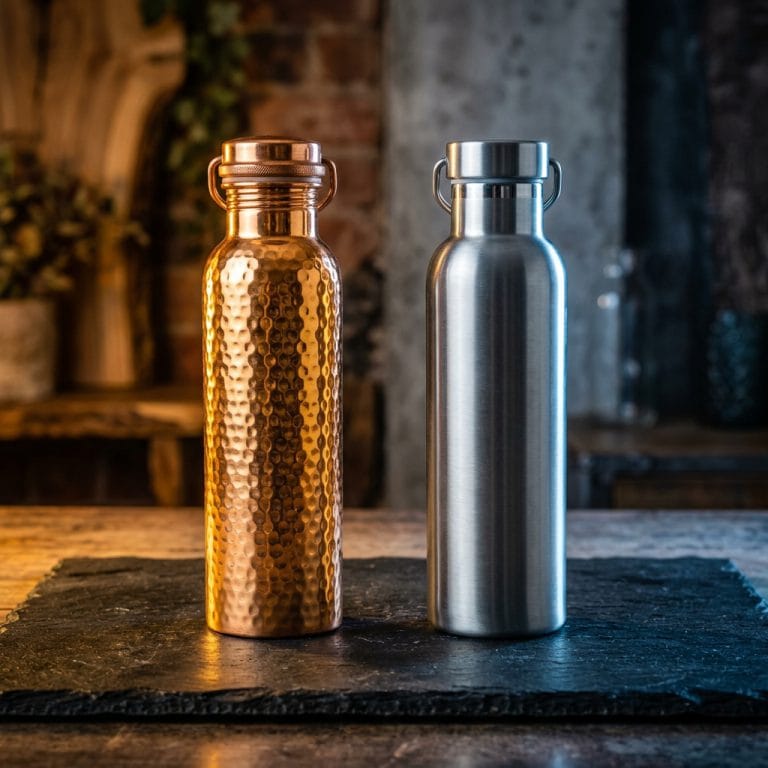
If you want reusable copper drinkware, compare the current Hammered, Matte and smooth designs in our approx. 1 litre copper bottle guide, or view the current shop collection. Product pages provide the latest stock, price and care information. AM Stores does not claim that drinking from these bottles treats, prevents or cures a medical condition.
Frequently Asked Questions
Is one copper bottle per day an official recommendation?
No. The approx. 1 litre figure describes the capacity of the current AM Stores bottles. The public-health sources cited in this guide do not recommend a fixed daily volume of water stored in copper.
Does the NHS recommend drinking copper water?
The NHS provides dietary guidance for copper and general hydration guidance. It does not prescribe a particular amount, timing or storage period for water kept in a copper bottle.
Is 2mg/L a recommended daily intake?
No. It is a copper concentration standard for drinking water at consumers’ taps. It is not a target for daily intake and does not measure the copper in water from an individual bottle.
Can children or pregnant people follow the same routine?
This guide does not set a routine for adults or children. UKHSA notes limited pregnancy data and that high exposure may affect children more severely. Ask a qualified healthcare professional for individual advice.
Can a copper bottle replace a copper supplement?
No. The NHS says most adults should be able to obtain the copper they need from a varied diet. Do not use an untested bottle to calculate nutrient intake or change supplements without professional advice.
Shopping for a copper bottle in the UK? Compare our copper water bottles by finish, size and price in pounds, with UK delivery options at checkout.