
Long before humans had any concept of germ theory or microscopes, ancient civilisations all over the world were storing their water and food in copper vessels. Ancient Egyptians used copper to sterilise wounds. Indian families have stored their drinking water in copper pots for centuries.
They didn’t know the exact biology behind it, but they knew one very important fact: copper antimicrobial properties keep things clean and prevent sickness.
Today, modern science has finally caught up and given this incredible phenomenon a name: the oligodynamic effect. Let’s look at exactly how it works.
What on Earth is the Oligodynamic Effect?
The oligodynamic effect is the fascinating ability of certain heavy metals—specifically copper, silver, and brass—to destroy bacteria, viruses, and fungi even in incredibly tiny concentrations. The word actually comes from Greek: “oligos” means few, and “dynamis” means force. It essentially translates to “a small force with a massive impact.”
Here is how it happens: when bacteria come into contact with a copper surface, tiny copper ions punch through the bacteria’s cell membrane. Once inside, they completely disrupt the cell’s internal processes, destroying its DNA and ultimately killing it. This is known as contact killing, and it can eliminate harmful bacteria in a matter of minutes to hours.
What the Actual Research Says
This isn’t just folklore; it’s heavily documented science. A landmark 2012 study published in the Journal of Health, Population and Nutrition tested heavily contaminated water that had been stored in copper vessels.
The results were amazing:
- After 16 hours of storage, researchers could not recover any bacterial colonies (including dangerous ones like E. coli). They were completely wiped out.
- The pH of the water gently shifted to a more alkaline state.
- Crucially, the concentration of copper in the water remained well within safe limits for human consumption (far below the WHO standard of 2mg/L).
More recently, during the COVID-19 pandemic, the highly respected New England Journal of Medicine published research showing that the SARS-CoV-2 virus survived for just 4 hours on copper surfaces, compared to 24 hours on cardboard and a massive 72 hours on plastic and stainless steel.
Why Hospitals Are Turning to Copper
The antimicrobial power of copper is so undeniable that copper alloys are now registered as the first solid antimicrobial material by the US Environmental Protection Agency (EPA). Hospitals across the globe are ripping out their plastic and steel door handles, bed rails, and touch surfaces, and replacing them with copper to drastically reduce healthcare-associated infections.
What This Means for Your Water Bottle
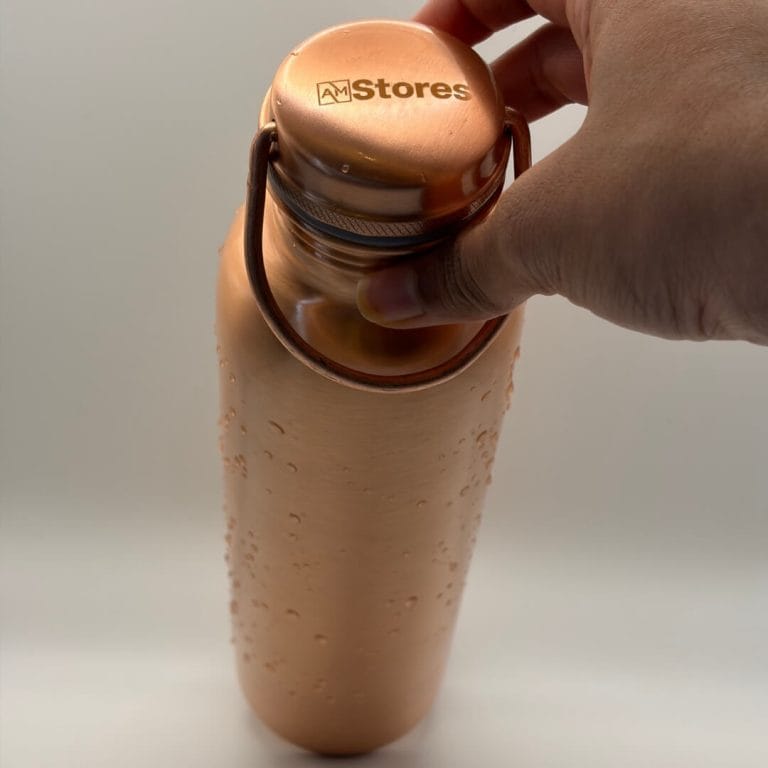
When you fill a 100% pure copper water bottle with water, this exact same oligodynamic effect goes to work. Over the course of 6 to 8 hours (usually overnight), copper ions naturally dissolve into the water. They kill off harmful bacteria while simultaneously providing you with a safe, healthy dose of this essential trace mineral.
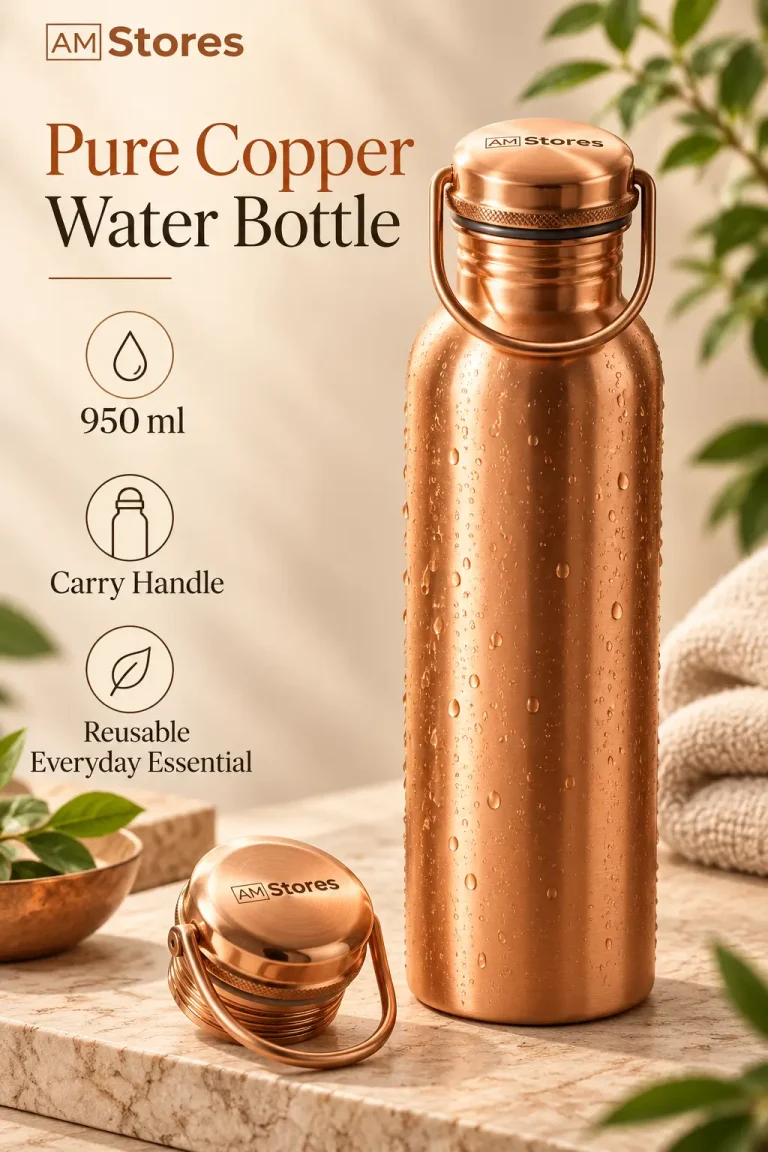
This is exactly why purity is so important. If you buy a cheap bottle that is copper-plated or coated with lacquer on the inside, this chemical interaction simply cannot happen. Only uncoated, unlined, pure copper does the job—which is the only material we use for our bottles at AM Stores.
Want to read more about how this impacts your health? Have a look at our guide on whether copper water is actually good for you, or browse our pure copper water bottle collection.
Shopping for a copper bottle in the UK? Compare our copper water bottles by finish, size and price in pounds, with UK delivery options at checkout.