
Let’s be completely transparent here. At AM Stores, we are incredibly proud of our pure copper water bottles. We know they look stunning, and we know they offer fantastic health benefits. But we also believe in being honest with our customers—and the truth is, no product is absolutely perfect for everyone.
If you’re thinking about making the switch to copper, you should know exactly what you’re getting into. Here is a no-nonsense look at the genuine disadvantages of copper water bottles, and how we naturally deal with them.
1. Copper Will Change Colour (And That’s Actually a Good Thing)
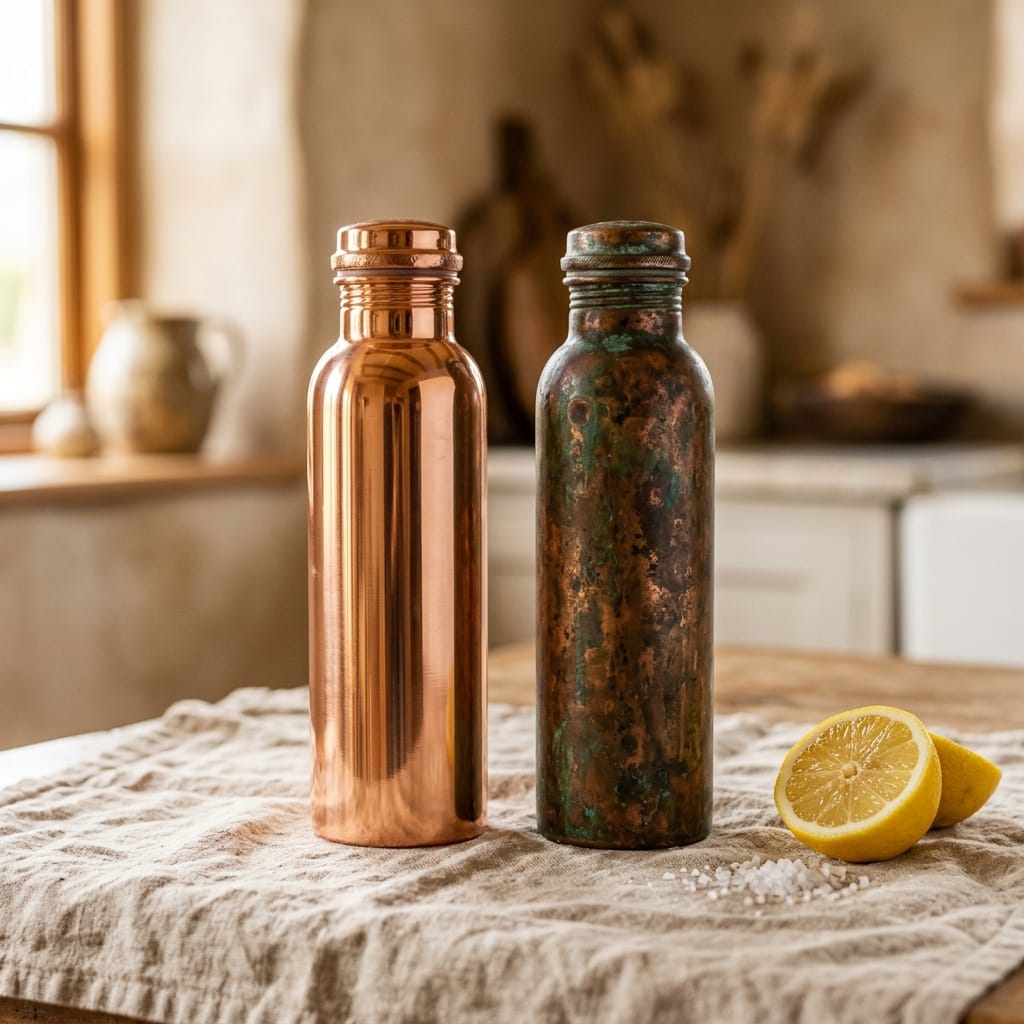
This is easily the number one thing people ask us about. Over time, your shiny copper bottle is going to darken, and it might even develop a slightly greenish patina in spots. For some people, this tarnishing feels like a flaw.
However, pure copper naturally oxidises (a process called patination) (a process called patination) when it meets air and water. If your bottle doesn’t change colour, it’s either coated in toxic lacquer or it’s not real copper. The patina is literally the proof that your bottle is 100% genuine.
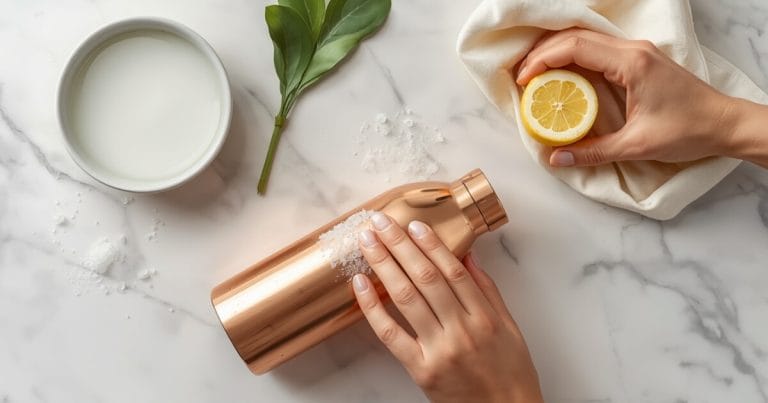
How to manage it: If you love the bright, shiny look, getting it back takes exactly two minutes. Just rub the inside and outside with half a lemon and a pinch of salt, rinse, and dry. We walk you through the whole process step-by-step in our Copper Care Guide.
2. It’s for Still Water Only
If you’re looking for a flask to hold your morning coffee, your gym smoothie, or sparkling water, a copper bottle simply isn’t going to work for you.
Copper bottles should only ever be used for plain, still water. Why? Because acidic liquids (like fruit juice or coffee) and carbonation will react negatively with the raw copper, potentially leaching too much of the mineral into your drink and altering the taste.
This is a strict limitation. If you need an all-rounder for hot and cold beverages, you’re better off with stainless steel. Copper is for pure hydration.
3. You Have to Hand Wash It
We all love the convenience of tossing things in the dishwasher, but doing that to a copper bottle will completely ruin it. The intense heat and harsh detergents will strip the copper and permanently damage its natural properties.
How to manage it: You have to wash it by hand. A quick rinse with warm water and a tiny bit of mild soap after use is all it takes for daily maintenance.
4. The Upfront Cost
Let’s talk about price. A proper 100% pure copper water bottle is going to cost more upfront than a plastic bottle from the supermarket or a cheap aluminium flask. Our bottles, for example, range from £19.88 to £28.88.
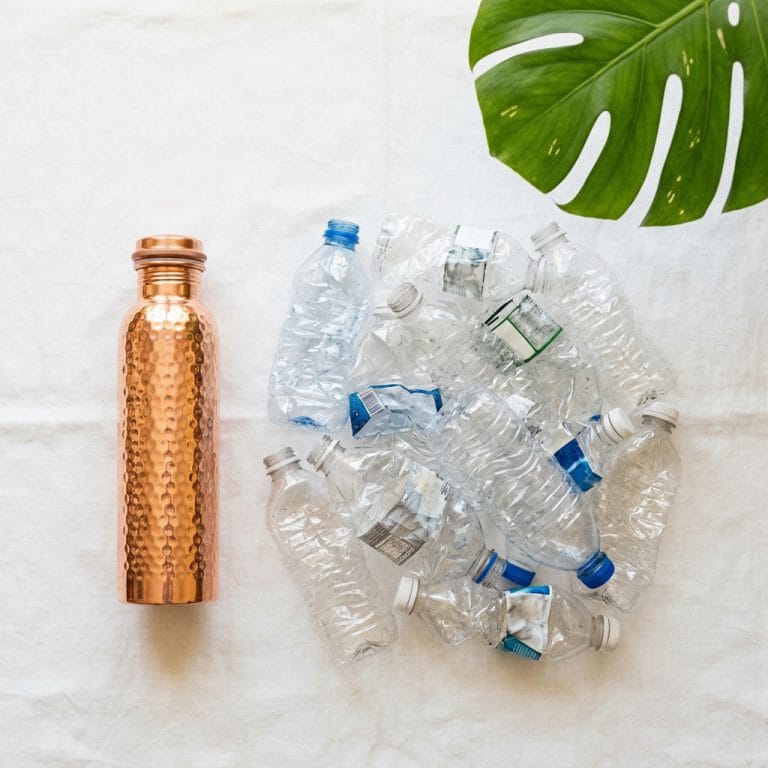
But when you consider that a well-maintained copper bottle will literally last you a lifetime, the long-term value becomes pretty obvious. You will never need to buy another disposable plastic bottle again.
So, Is It Still Worth It?
For most of our customers, the answer is a resounding yes. The small inconveniences—like hand washing and occasional lemon-salt polishing—are heavily outweighed by the incredible benefits. You get naturally purified water, a daily boost of essential trace minerals, and a beautiful, sustainable product that cuts down on plastic waste.
If you’re happy to trade a tiny bit of maintenance for a healthier hydration habit, explore our copper bottle collection. They all come with free UK delivery and a 30-day return policy. Still on the fence? Check out our FAQ page for more details.
Frequently Asked Questions
Why does my copper bottle turn green?
The green colour is verdigris — a natural patina that forms when copper reacts with air and moisture. It is not harmful and is proof your bottle is genuine, uncoated copper. Clean it off with lemon juice and salt.
Can I put hot water in a copper bottle?
No. Hot liquids accelerate copper leaching beyond safe levels and can damage the bottle. Only use room-temperature or cool still water in your copper bottle.
Is copper bottle water safe during pregnancy?
While copper is an essential nutrient, pregnant women should consult their GP or midwife before drinking copper-infused water regularly, as excess copper intake needs careful monitoring during pregnancy.
How often do I need to polish my copper bottle?
For daily use, a quick rinse with warm water is sufficient. A deep clean with lemon and salt is recommended once a week, or whenever tarnishing bothers you.
Do copper bottles make water taste different?
Some people notice a very subtle metallic taste, particularly when the bottle is new. This fades with regular use and proper cleaning. Using filtered water also helps.